



We often hear about it in the summer when preparing to expose ourselves to the sun because of its ability to promote a healthy and long-lasting tan, beta-carotene is actually an element that is always very important for our bodies (and not only), useful in fulfilling numerous functions thanks to its many properties. It is found in a great many foods regularly consumed in a healthy and varied diet such as the Mediterranean diet and is widely used in industry, in food as a colorant, in pharmaceuticals as a supplement, and in cosmetics as an antioxidant. But what is beta-carotene? What is it used for?
Beta-carotene is a natural yellow-orange pigment that belongs to the carotenoid family, precursors of vitamin A, substances that are essential for its synthesis within the body. For this reason it is also called provitamin A. Beta-carotene, like all carotenoids, is fat-soluble, as well as sensitive to light and heat. It is converted to vitamin A within the small intestine and then goes to the liver, which then provides for its release little by little, according to the body's needs.
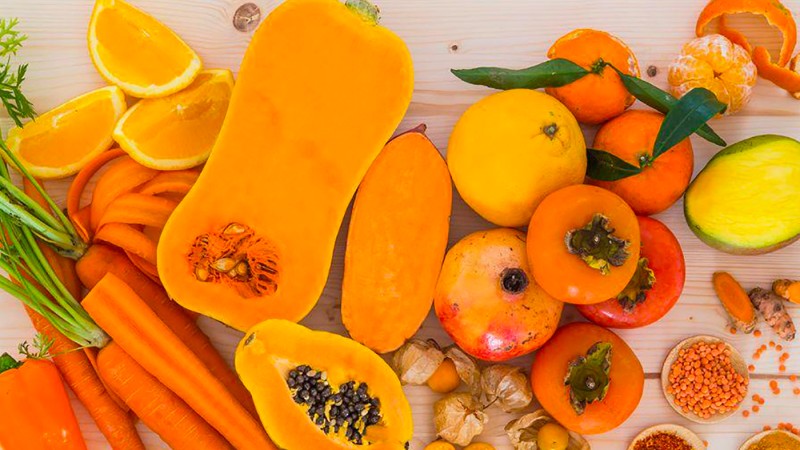
Beta-carotene is found in many fruits, green leafy vegetables, including carrots and squash, grains and oils. In addition to fruits and vegetables, beta-carotene is found everywhere around us, even if we don't see it. In spring and summer the leaves of trees are green, in autumn the chlorophyll in the leaves decreases and the carotenoids become visible by coloring the leaves yellow and orange. When ingested in very high amounts, carotenoids can even affect physical appearance. Flamingos, for example, are born gray-their bright pink-orange color comes from the carotenoids in their food.
An exceptional ally to healthy skin and hair, beta-carotene offers benefits to the entire body, starting with the cardiovascular system and ending with the nervous and immune systems. Its main property is antioxidant, which is why it is present wherever cells need to protect themselves from oxidation-that is, to counteract oxidative stress from excess free radicals. In particular, beta-carotene limits the proliferation of free radicals by slowing the inflammation they cause within the body and the aging of cells, tissues and skin. The benefits of beta-carotene are increased when taken at the same time as vitamin C, vitamin E and zinc.
The skin also protects itself from oxidation with beta-carotene, but, particularly interesting for us, the supply is not from within through the bloodstream, but from the sebum secreted by the sebaceous glands, thus from outside. Nothing could be easier then for a formulator to offer skin extra antioxidative protection with creams containing beta-carotene in a sebum-like base!